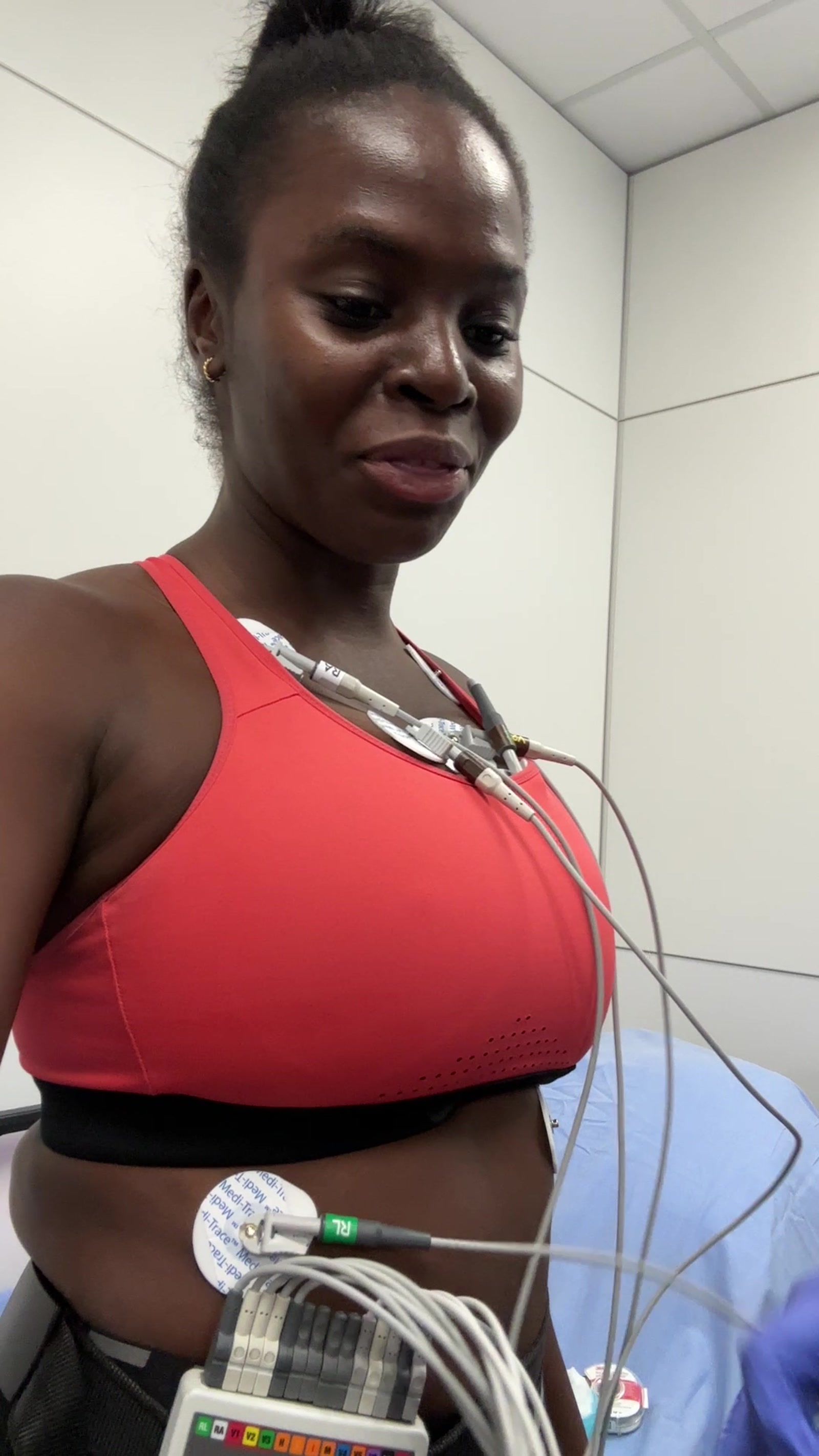
Twenty-seven.— In the middle of a pandemic.
Coronary artery disease. High risk for a heart attack within ten years. A family history that wrote the script before I got here. My mother and my grandmother both died young from heart disease. It's lineage.
And here's the part nobody tells you about how a diagnosis like this gets caught.
Laboratory Report
| Test | Result | Reference | Status |
|---|---|---|---|
| LDL Cholesterol | Within range | < 3.0 mmol/L | Optimal |
| HDL Cholesterol | Within range | > 1.3 mmol/L | Optimal |
| Total Cholesterol | Within range | < 5.2 mmol/L | Normal |
| EKG / ECG | Normal sinus rhythm | — | Normal |
| Stress Test | Negative | — | Negative |
| Holter Monitor | No arrhythmias | 24 hr | Normal |
| Lipoprotein(a) * | 1,700+ nmol/L | < 75 nmol/L | Critical |
* Not part of the standard cardiac panel. Ordered separately.
Five times the upper limit for white populations. Three times for people of colour.
The data agreed with every physician already in the room. This patient is optimally healthy. I felt like I was wasting everyone's time. I apologized more than once for being there. We were in the middle of a global health crisis and I kept showing up anyway. Kept asking. Kept sitting in those rooms while the instruments said nothing was wrong.
The results looked fine? The doctor kept going anyway. She ordered the one test that isn't standard — the one they don't usually think to run. Lipoprotein(a). That's when she knew.
CT Angiogram · Finding
Plaque on the left anterior descending artery."Optimally healthy" → Coronary Artery Disease. At twenty-seven.
The data was fine. The data was incomplete. The only thing that saved me was a doctor who chose to listen past what the instruments were telling her. How many women don't get that doctor?
And six years later — in ambulances, in urgent care, with new physicians — I still have to convince the healthcare system that I have heart disease.